The primates
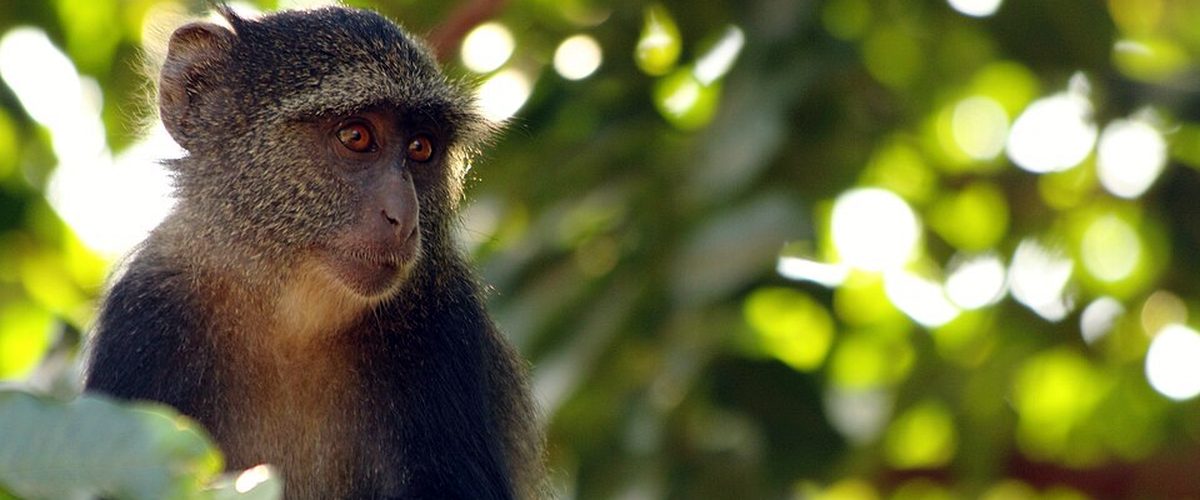
Three species overlap on Unguja. The Zanzibar red colobus, endemic and endangered, moves in noisy groups through the canopy and feeds mostly on leaves. Sykes' monkey, quieter and more opportunistic, works the forest edges and gardens. The vervet completes the picture.
The forest antelopes
Three small antelopes live in the thickets: Aders's duiker, rare and localised, the Zanzibar blue duiker, and the suni. They are crepuscular animals, extremely shy, heard more often than seen. Snare hunting long weighed on their numbers.
The quiet carnivores
The Zanzibar servaline genet deserves a special mention. It was formally described only in 1998, from a long-dead specimen; the first photographs of a live individual date from 2003. The African civet and several mongooses complete the list, alongside a palm civet recorded in 2004.
The Zanzibar leopard
It was the island's only large carnivore. It is now considered extirpated, wiped out by hunting and habitat loss. Its story is inseparable from a local belief: the animal was said to be kept by witches who sent it to harm villages. That reputation made its extermination popular.
A 1996 survey of villagers and hunters gathered reported sightings for every year from 1990 to 1996. Nothing has ever been confirmed since, and the conservation programme considered in the mid-1990s was shelved for lack of prospects.
A mounted specimen is kept at the Zanzibar museum. That is now the only certain way to see one.
Birds and bats
The forests hold a modest but rewarding bird fauna: hadada ibis, African goshawk, palm-nut vulture, scops owl, malachite kingfisher. On neighbouring Pemba live the Pemba white-eye and the Pemba flying fox, a large fruit bat.
And at sea
The south-west of the island, around Kizimkazi, is known for its dolphins. The nearby reefs hold the classic fauna of the western Indian Ocean. The Nile monitor lizard, finally, turns up near water and often surprises visitors with its size.