The sultan who moved his capital
Seyyid Said bin Sultan, ruler of Oman, landed in Zanzibar in 1804 and quickly grasped what the island could yield. He introduced the clove tree around 1818, then moved his capital from Muscat to Stone Town in the 1830s. An Arab sultanate thus settled durably on an African island, 35 kilometres from the mainland.
The clove fortune, and its other side
Cloves come from the Maluku Islands in Indonesia. Transplanted to Zanzibar and Pemba, the tree thrived to the point that the archipelago became the world's leading producer by the mid-nineteenth century. In 1860, cloves made up around 22% of the island's exports, and the royal family levied a quarter in export tax.
That prosperity rested on forced labour. The clove plantations were worked by enslaved people, and Zanzibar became one of East Africa's main slave markets. The memory of that period remains raw: it fed the violence of the 1964 revolution.
In 1872, a hurricane swept away two thirds of Unguja's clove trees. That single storm is why Pemba, the neighbouring island, produces more cloves today than Zanzibar itself.
Thirty-eight minutes of war
On 25 August 1896, Sultan Hamad bin Thuwaini, friendly to the British, died suddenly in his palace. His cousin Khalid bin Barghash moved in and proclaimed himself sultan without London's approval. An ultimatum gave him until nine the next morning to leave.
He refused. On the morning of 27 August, British cruisers opened fire on the palace. The bombardment lasted between 38 and 45 minutes depending on the source: the shortest war ever recorded. Around five hundred defenders lost their lives; on the British side, one sailor was wounded.
Khalid fled to the German consulate, from which the German navy smuggled him out on 2 October. He was not captured until 1916, was exiled, then allowed back to East Africa, where he died in 1927.
Two footnotes
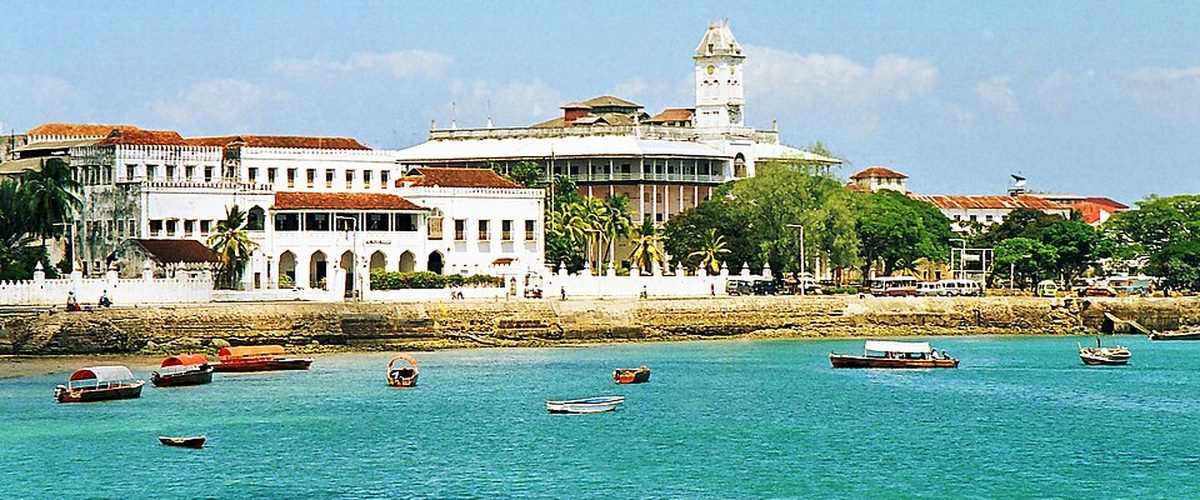
- The palace targeted in 1896 included the Beit al-Ajaib, the House of Wonders, said to be the first building in East Africa fitted with electricity.
- Stone Town has been a UNESCO World Heritage Site since 2000, for its alleys, coral-stone houses and carved wooden doors.
The birth of Tanzania
After the 1964 revolution, Zanzibar united with Tanganyika on 26 April of that year. The name of the whole, at first the United Republic of Tanganyika and Zanzibar, was contracted on 29 October 1964 into the United Republic of Tanzania. The archipelago has retained a semi-autonomous status ever since, with its own government.